Traditional methylation profiling relies on bisulfite conversion, PCR amplification, or methylation-specific enrichment methods that can introduce bias, damage DNA. Renew’s Direct Targeted Methylation Sequencing (dTMS) enables high-depth interrogation of genomic regions of interest while preserving native methylation information.
By combining Agilent SureSelect target enrichment with native nanopore sequencing, dTMS enabled accurate regional methylation analysis across targeted genomic regions. For this application, Agilent's SureSelect MethylSeq DMR panel was applied to gDNA from the well-characterized HG002 reference cell line (Genome in a Bottle, GIAB)
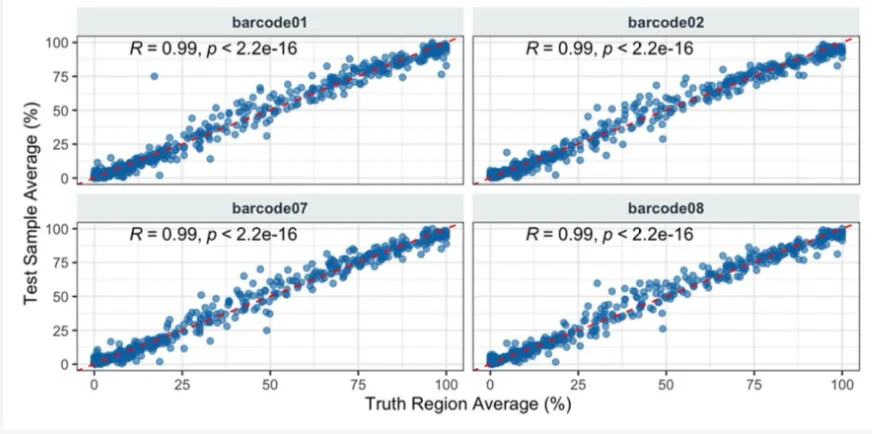
Figure 1. Regional methylation measurements generated by targeted native-read sequencing demonstrate strong concordance with methylation standards. Regional methylation values showed high agreement with reference methylation measurements across targeted loci (R² ≥ 0.99), supporting accurate and reproducible regional methylation profiling using targeted native-read sequencing.
Where allele structure directly impacts clinical interpretation, long-read sequencing provides critical resolution. While many pharmacogenes can be assessed with short-read methods, structurally complex loci containing duplications, hybrid alleles, and phased variants, such as CYP2D6, HLA, UGT1A1, and select DPYD/TPMT contexts, often require long-read context.
A 49-gene pharmacogenomics panel was developed using Twist Bioscience PCR-based target enrichment and Oxford Nanopore long-read sequencing. Performance was evaluated across GIAB and Coriell reference samples, supporting accurate haplotype, copy number, and structural variant characterization in clinically relevant PGx genes.
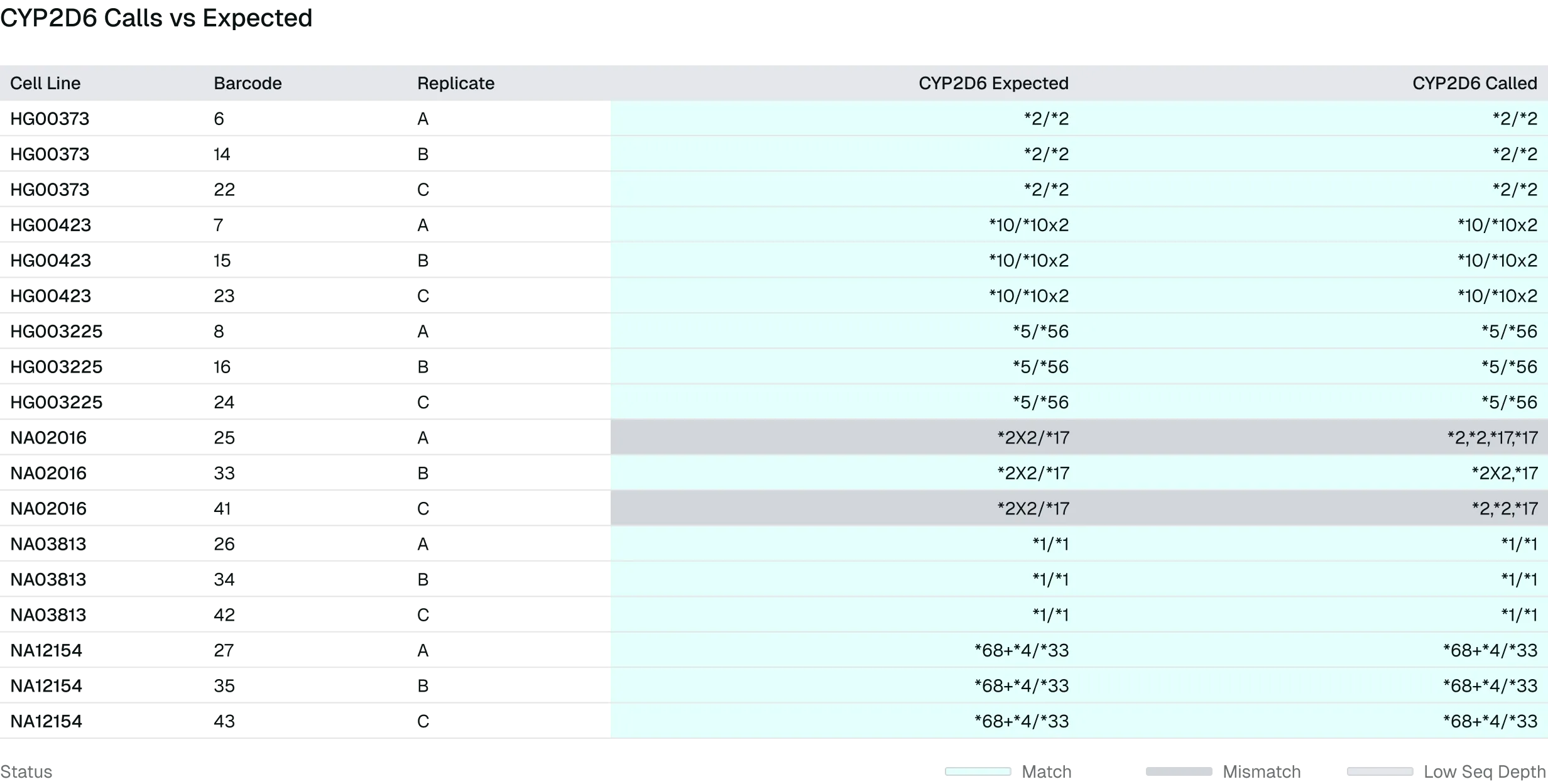
Figure 2. Long-read sequencing enables accurate CYP2D6 haplotype and structural variant resolution. Per-sample CYP2D6 star-allele calls, including copy number changes and hybrid alleles (e.g., *1/*4x2, *36+*10), were compared with expected haplotypes across reference samples (GIAB, Coriell; ≥30x coverage). High concordance was observed, demonstrating accurate resolution of clinically relevant pharmacogenomic haplotypes and structural variation.