Start A Project
Close-up of a clear plastic microplate with multiple round wells used in laboratory testing.

Overview

Direct Targeted Methylation Sequencing (dTMS) combines Agilent SureSelect hybrid enrichment technology with native Oxford Nanopore sequencing chemistry for high-depth analysis of targeted genomic regions.
  • Targeted, high-depth sequencing of defined genomic regions
  • Integrated detection of SNVs, STRs, haplotypes, and methylation
  • Native 5mC and 5hmC profiling without bisulfite conversion
  • Long-read resolution across structurally complex loci
DNA icons
Variant & Structural Analysis
SNV, STR, and repeat expansion analysis
Haplotype and phased variant analysis
interesting process icon
Multi Omics Profiling
Regional methylation (5mC, 5hmC) analysis
Integrated genomic + epigenetic profiling
dotted bow tie icon
Translational & Panel Development
Custom multiomic panel development
Assay development across therapeutic areas
Technology
Workflow
Panel Design
Performance
Data Outputs

Technology and Compatibility

dTMS brings the flexibility of hybrid capture to native long-read sequencing, allowing researchers to target established or custom genomic regions while preserving long-read context and native epigenetic information.
  • Compatible with
  • Commercially available SureSelect probe sets
  • Many community-developed SureSelect probe sets
  • Custom-designed panels tailored to specific research or clinical applications
  • Component
    Technology
  • Target Enrichment Library
    Agilent SureSelect hybrid capture
  • Preparation
    Proprietary WBL dTMS workflow
  • Sequencing Platform
    Oxford Nanopore PromethION

Workflow

dTMS follows an optimized hybrid-capture and native long-read sequencing workflow from sample preparation through integrated variant and methylation analysis.
  • 1. gDNA Extraction
    High-quality genomic DNA is isolated from samples
  • 2. DNA Fragmentation
    DNA is fragmented to optimize capture efficiency
  • 3. Target Enrichment
    Regions of interest enriched via hybrid capture
  • 4. Library Preparation
    Proprietary preparation and adapter ligation
  • 5. Long-Read Sequencing
    Native sequencing on PromethION
  • 6. Bioinformatic Analysis
    Variant calling and methylation profiling

Target Panel Design

Custom panel design supports targeted interrogation of genes, regulatory regions, and complex loci, with design parameters tailored to panel size, target number, and genomic context.
  • Parameter
    Specification
  • Target Size Range
    ~0.1 – 0.75 Mb
  • Number of Targets
    ~3–50+ genes
  • Probe Platform
    Agilent SureSelect
  • Design Considerations
    GC content (40–60%), repetitive regions, genomic complexity

Sequencing Performance

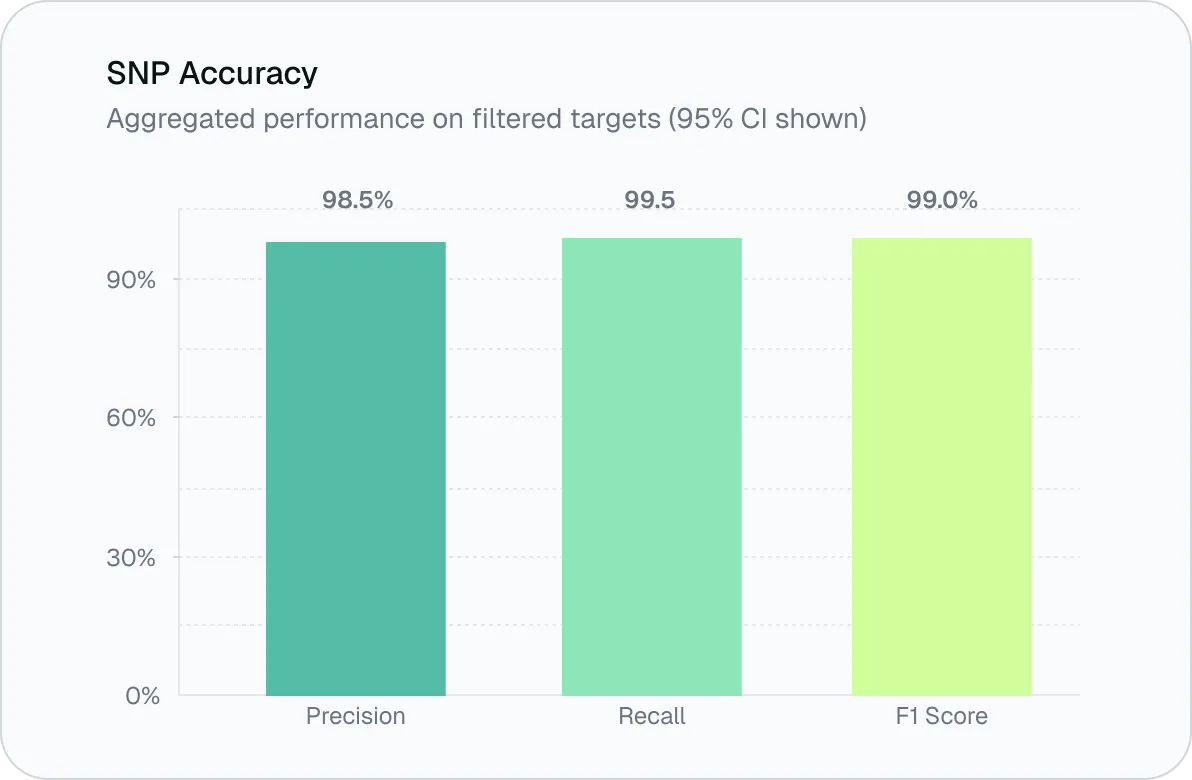
Coverage, yield, and multiplexing can be adjusted based on panel size and study goals. Representative performance metrics are shown below. Additional feature-level data are available in the dTMS Feature Characterization white paper.
Bar chart showing SNP accuracy: Precision 98.5%, Recall 99.5%, and F1 Score 99.0%.
  • Metric
    Typical Performance
  • Samples per Flow Cell
    Up to ~24
  • Average Coverage
    ~150× across ~0.5 Mb targets
  • Read Length
    ~1 kb N50
  • CpG Coverage
    > 95% complexity
  • Epigenetic Signals
    5mC, 5hmC

Bioinformatics and Data Outputs

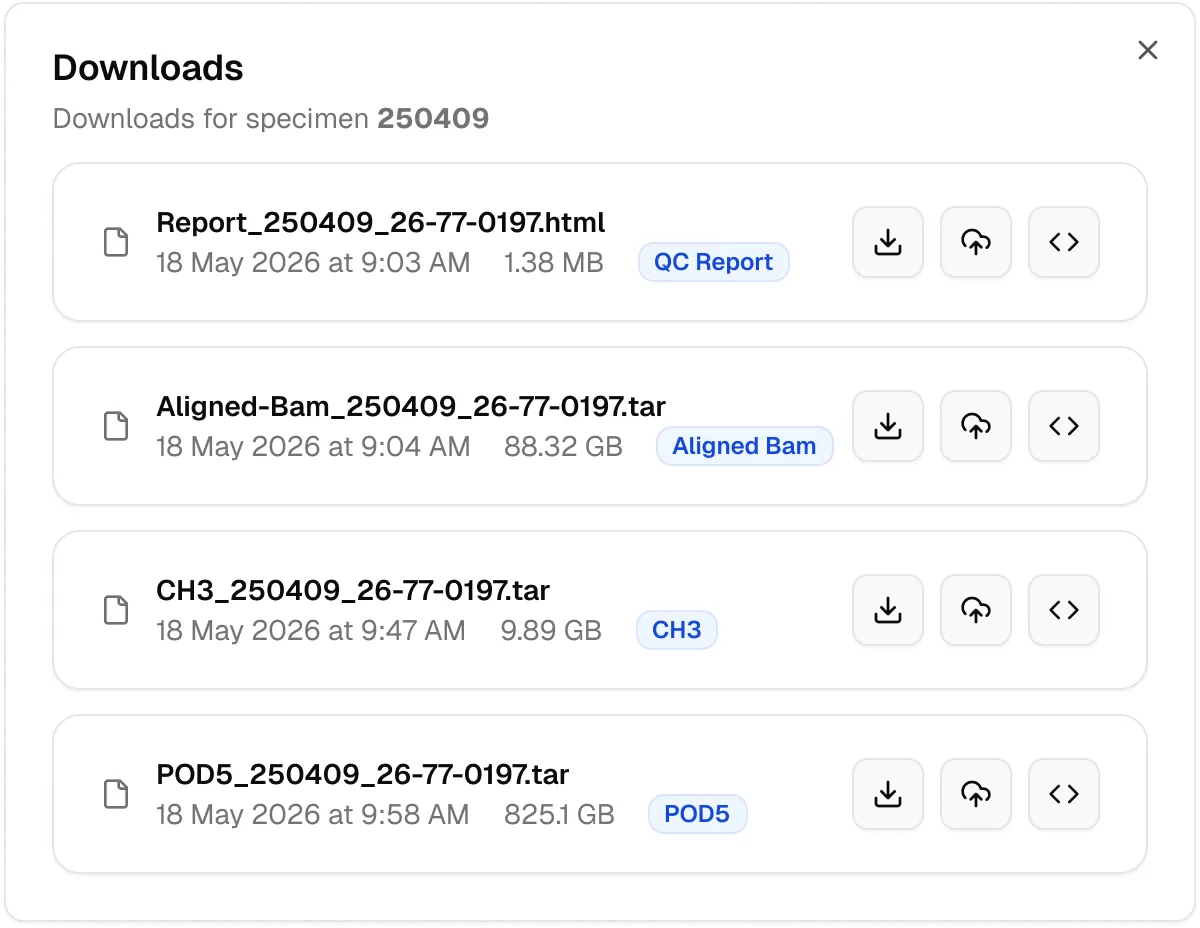
Data outputs are designed to optimize data storage, transfer, and analysis. Methylation data is provided in a unique CH3 file format which reduces data size by up to 95%. This memory-efficient format stores data in an on-disk database, enabling larger-than-memory tasks.
Renew developed the ModSeqR R package, which converts ONT methylation data into array-like formats compatible with tools such as minfi, DMRcate, and chAMP. This solution empowers researchers to efficiently leverage dWMS data within familiar frameworks, facilitating advanced epigenetic insights.
Download panel showing four files for specimen 250409 with names, sizes, dates, and download options.
  • Data Outputs
  • QC Report
    Sequencing metrics and run statistics
  • BAM
    Aligned reads
  • CH3
    Base modifications
  • POD5
    Raw sequencing data (available for an additional fee)
  • Data Delivery Options
  • Client Web Portal
    Manual download | Mac, Linux, Windows
  • AWS S3 Transfer
    Automated process | AWS to AWS
  • Command Line Script
    Manual download | Mac, Linux

Service Inclusions

Each project is supported by dedicated project management and cross-functional expertise across assay development, bioinformatics, and regulatory strategy. Renew provides proactive communication, transparent project tracking, and technical support from study design through data delivery.

Questions & Answers

How does Renew’s dTMS detect specific methylation sites?

dTMS combines hybridization-based target enrichment with native Oxford Nanopore sequencing to precisely focus on genomic regions of interest. Using Agilent’s SureSelect (for gDNA) or Avida (for cfDNA) chemistries, dTMS enriches selected loci while preserving native DNA.

How does Renew ensure accuracy and specificity in targeted methylation sequencing?

Accuracy and specificity are achieved through optimized library preparation, hybrid capture enrichment, and native long-read Oxford Nanopore sequencing. By avoiding PCR amplification and chemical conversion, this approach minimizes bias and preserves native DNA context, enabling precise, reproducible, single-molecule methylation measurements at targeted loci.

How customizable are the targeted regions for methylation sequencing at Renew?

Target regions are highly customizable. Researchers define their regions of interest, and Renew designs a tailored probe set to match those targets. The dTMS workflow can be adapted to specific genes, regulatory elements, or CpG-rich regions, supporting both focused discovery and validation studies.

What sample types are compatible with targeted methylation sequencing?

Direct Targeted Methylation Sequencing (dTMS) is optimized for high-quality genomic DNA (gDNA). Intact DNA enables accurate, long-read analysis of both sequence and methylation while avoiding DNA damage associated with bisulfite-based methods.

What kind of data output and reporting does Renew provide for targeted methylation sequencing?

Renew provides analysis-ready sequencing and methylation data, including 5mC/5hmC levels, phasing, and variant calls within targeted regions, with bioinformatics support and reporting to support downstream analysis and interpretation.

What advantages does targeted DNA methylation sequencing offer for focused research or clinical studies?

Targeted native-read methylation sequencing provides a cost-efficient way to interrogate specific genes or regions of interest while preserving native DNA modifications. By avoiding PCR and chemical conversion, it delivers accurate, low-bias methylation data well suited for biomarker discovery, focused translational studies, and clinical assay development.

How does Renew support clients in designing custom targeted methylation panels?

Renew partners closely with clients to define regions of interest and design custom capture panels. We provide end-to-end support from study design and probe development to sequencing, analysis, and reporting to ensure each panel is tailored to your project.

Renew combines platform flexibility, nanopore expertise, and operational excellence to resolve areas
of the genome that standard approaches cannot.
Contact Us