Neuron Cell-Death Test

NeuroLens

®
Older woman discussing a clinical diagnosis with a female doctor who is reviewing a tablet in a medical office.
NeuroLens is Renew Biotechnologies’ nanopore-based liquid biopsy platform for profiling neuron-associated cell-free DNA (cfDNA) methylation signatures from blood.
By combining native methylation sequencing, proprietary library preparation, brain methylation atlas generation, and cell-of-origin deconvolution algorithms, NeuroLens supports neuron-resolved investigation of neurodegeneration.
Built on whole-genome nanopore sequencing, NeuroLens profiles cfDNA without bisulfite conversion, PCR amplification, or predefined array content, supporting neurodegeneration research and biomarker development.

NeuroLens Supports Molecular Characterization and Longitudinal Monitoring of Neurodegeneration

Molecular Characterization

Generate Multiomic Insights Into Neurological Disease Biology
Neurodegeneration Research
Generate molecular insights into pathways and mechanisms underlying neurodegeneration.
Cohort Stratification
Identify biologically distinct patient subgroups for research and translational applications.
Neurological Disease Expansion
Enable future research applications across broader neurological and neurodegenerative conditions.

Longitudinal Monitoring

Track Disease Dynamics and Molecular Change Over Time
Disease Progression Monitoring
Characterize longitudinal biological changes associated with neurodegenerative disease progression.
Therapeutic Response Research
Assess molecular changes associated with therapeutic intervention and treatment response.
Longitudinal Cohort Analysis
Support repeated-measures and time-series study designs across patient populations.

NeuroLens Differentiation

Key Advantages

Disease-agnostic detection of neurodegeneration across neurological conditions
Cell-type-informed neuroanatomic resolution beyond aggregate injury biomarkers
Real-time monitoring of active cell death and therapeutic response
Expandable atlas framework supporting future neural and peripheral cell types

Platform Architecture / Workflow

Primary Brain Methylation Atlas Generation
Proprietary cfDNA Library Preparation
Native cfDNA Methylation Sequencing
Cell-of-Origin System Deconvolution
Classifier Refinement
& Expansion

The NeuroLens Report

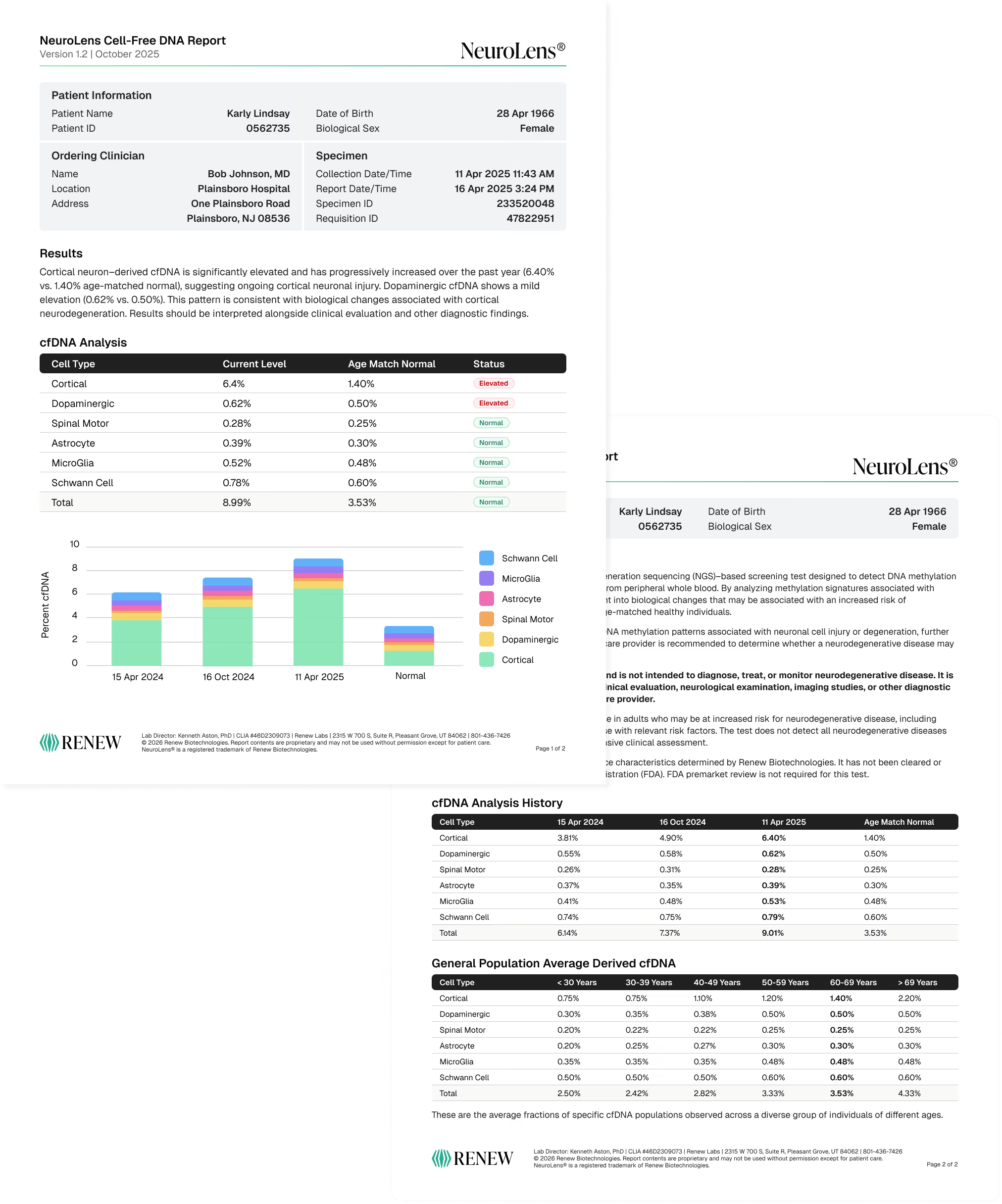
NeuroLens reports provide estimated cfDNA contributions by cell type, reported as a relative percentage of total cfDNA, enabling evaluation of neuron- and glia-associated cfDNA patterns across neurodegeneration studies.
  • Current research-use assay includes:
  • Cortical neurons
  • Dopaminergic neurons
  • Spinal motor neurons
  • Astrocytes
  • Microglia
  • Schwann cells
Regulatory Status
Research-use assay currently available. Validation for laboratory-developed test (LDT) is anticipated to be completed in July 2026.
NeuroLens DNA report shows elevated cortical and dopaminergic cfDNA, with charts of cell type levels over time.

Proof-of-Concept Clinical Performance

Current blood-based biomarkers for neurodegenerative disease primarily reflect aggregate pathology or generalized neuronal injury, providing limited insight into which neuronal populations are affected. NeuroLens addresses this limitation through native cfDNA methylation sequencing and brain cell-type-informed deconvolution.
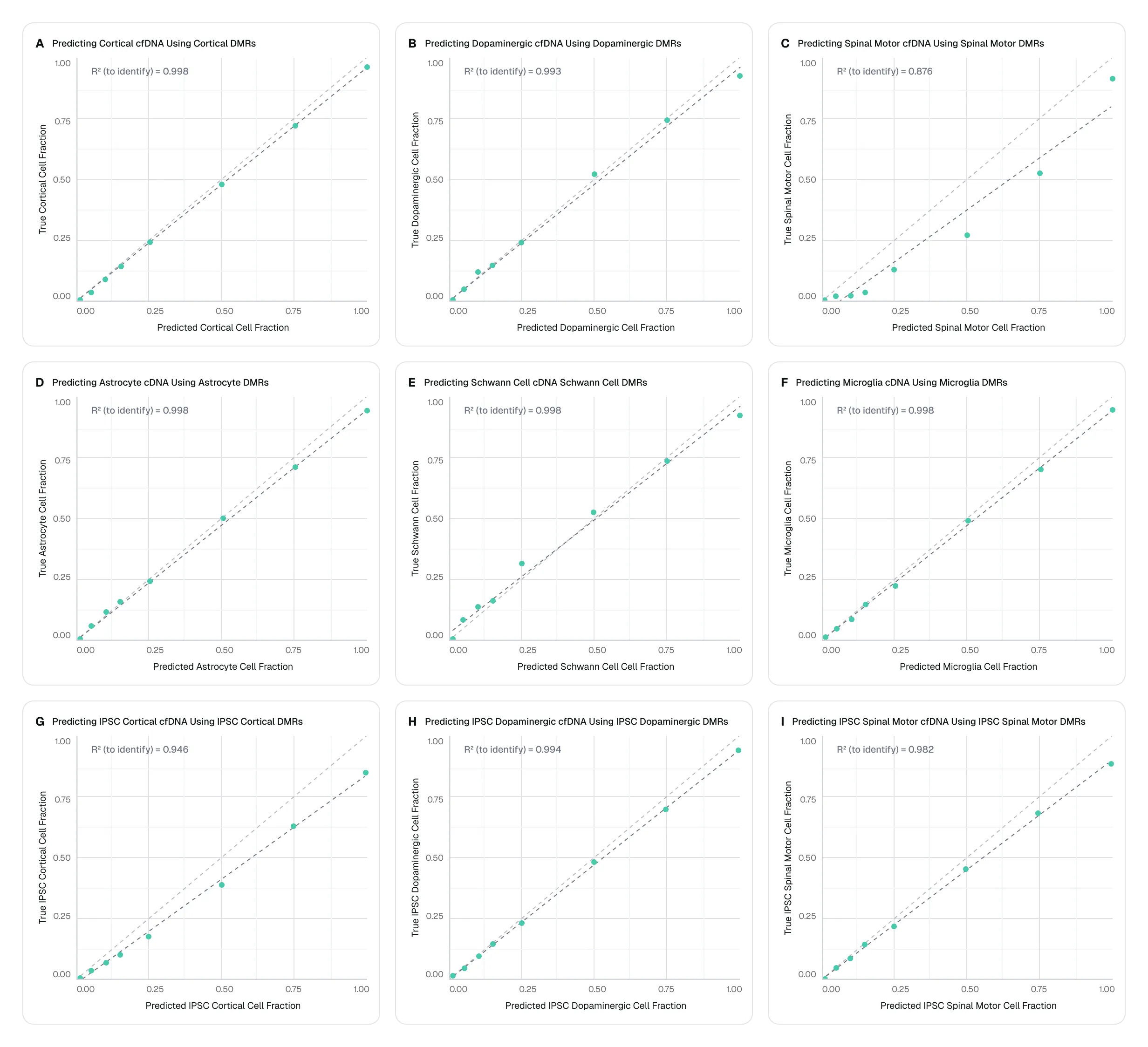
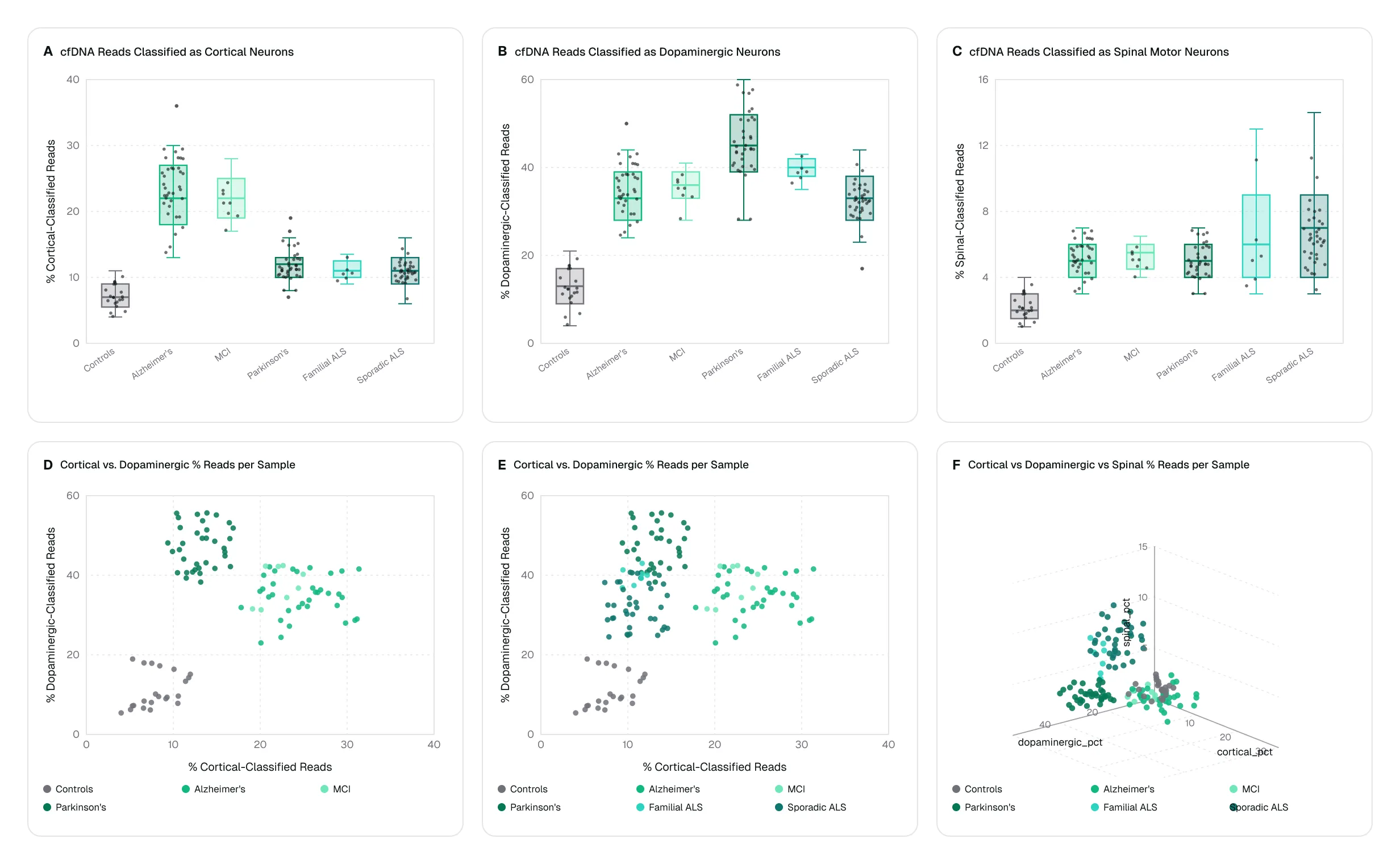
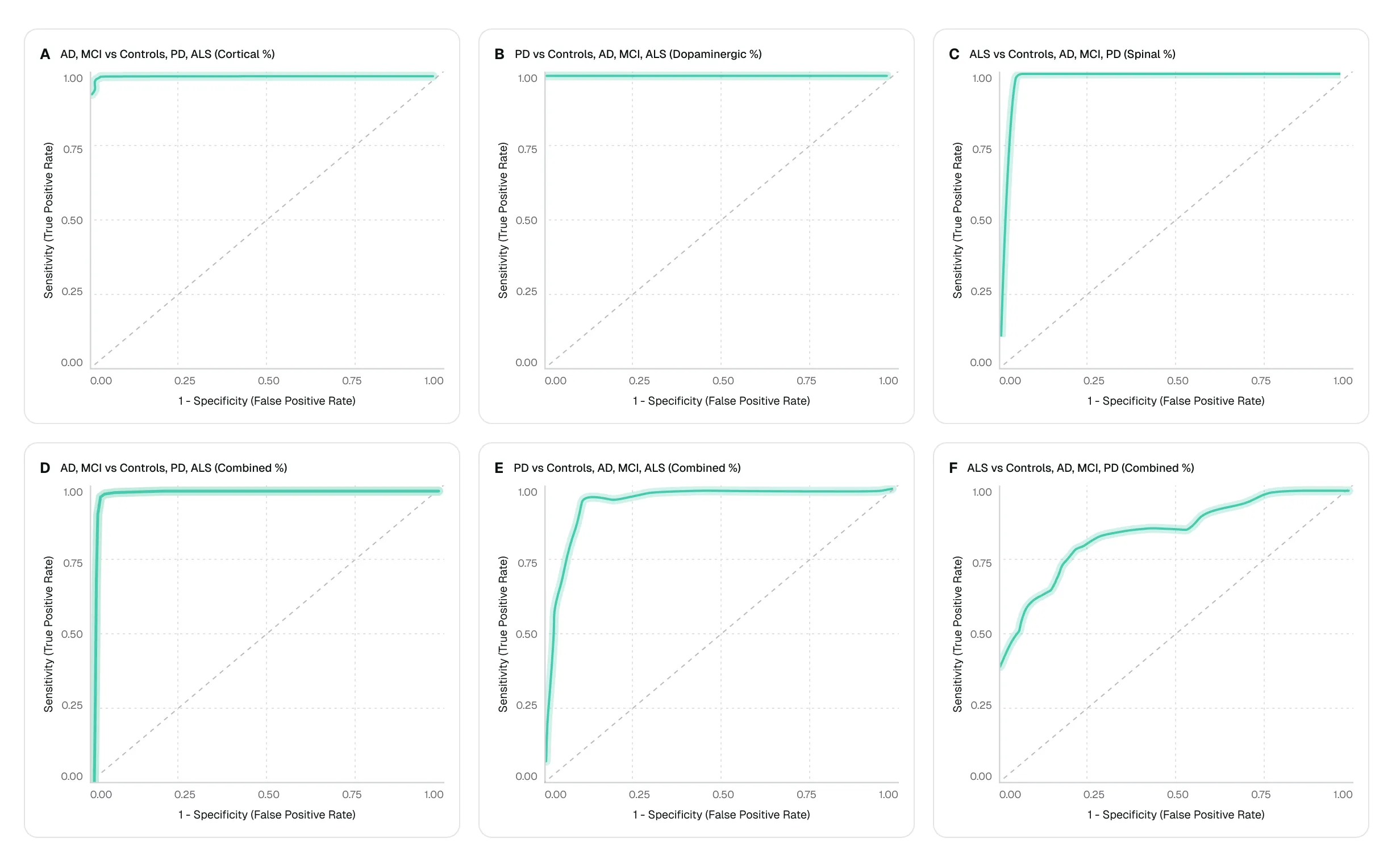
Cell-type cfDNA classifiers were evaluated in in silico mixtures (Figure 1), then applied to 137 plasma samples from AD, MCI, PD, ALS, and controls (Figures 2–3). Combined neuron classifiers supported disease-group separation in multi-disease contexts, demonstrating the liquid biopsy potential of cfDNA methylation deconvolution.
NeuroLens validation scatter plots comparing predicted and true cfDNA cell fractions across neuronal and glial cell types.
Figure 1. In silico dilution testing supports classifier accuracy across neural cell types. Correlation plots show NeuroLens classifier performance across cfDNA-like mixtures, comparing predicted versus expected cell-type fractions after fragmented neural-cell reads were added to a human plasma cfDNA background. Classifiers were evaluated for primary cortical (A), dopaminergic (B), and spinal motor neurons (C), astrocytes (D), Schwann cells (E), microglia (F), and iPSC-derived neurons (G–I). Strong linearity was observed when classifiers were matched to their reference cell type.
Graphs showing cfDNA reads classified as cortical, dopaminergic, and spinal motor neurons across neurological conditions.
Figure 2. Neuron-associated cfDNA methylation signals reflect disease-relevant neurodegeneration. NeuroLens cortical (A), dopaminergic (B), and spinal motor neuron (C) classifiers were applied to plasma samples from individuals with Alzheimer’s disease (AD), mild cognitive impairment (MCI), Parkinson’s disease (PD), amyotrophic lateral sclerosis (ALS), and healthy controls. Elevated neuron-derived cfDNA signals were observed in the neuronal populations most closely associated with each disease. Individual neuron classifier scores were visualized in two- and three-dimensional space, demonstrating disease-associated clustering across AD, PD, and ALS cohorts (D–F).
Six ROC curves comparing sensitivity and false positive rates for AD, MCI, PD, ALS across brain regions and combined data.
Figure 3. Classifiers combining signatures from multiple neuron types predict disease in multi-disease contexts. Combined NeuroLens classifiers integrating cortical, dopaminergic, and spinal motor neuron-like methylation signatures were evaluated in plasma samples from individuals with AD, PD, ALS, and healthy controls. ROC analyses demonstrated strong disease-versus-control performance (A–C) and maintained discrimination in multi-disease comparisons (D–F), supporting integrated neuron-associated cfDNA methylation profiling for neurodegeneration.

Strategic Partners
& Research Collaborators

Partner with Renew to advance neuron-associated cfDNA profiling through expanded atlases, clinical cohorts, and translational studies.
Explore NeuroLens for Your Research Program
Apply native cfDNA methylation sequencing and atlas-driven deconvolution to neurodegeneration, liquid biopsy, and translational biomarker studies. Contact us to discuss pilot projects, research access, and study design.
Contact Us